When sourcing medical disposable products internationally, many buyers look for suppliers
with ISO 13485 certification.
However, one common misunderstanding is that ISO 13485 is a product certification.
It is not.
ISO 13485 is a quality management system standard designed specifically for organizations
involved in medical devices. It defines how manufacturers control production processes,
documentation, risk management, and continuous improvement.
For hospitals, distributors, and medical importers, understanding what ISO 13485 really
means can help reduce supplier risks and make better purchasing decisions.
Key Point for Medical Buyers
ISO 13485 confirms that a manufacturer follows a controlled medical device quality
management system. However, buyers should still evaluate product compliance, testing
reports, and manufacturing capability before cooperation.
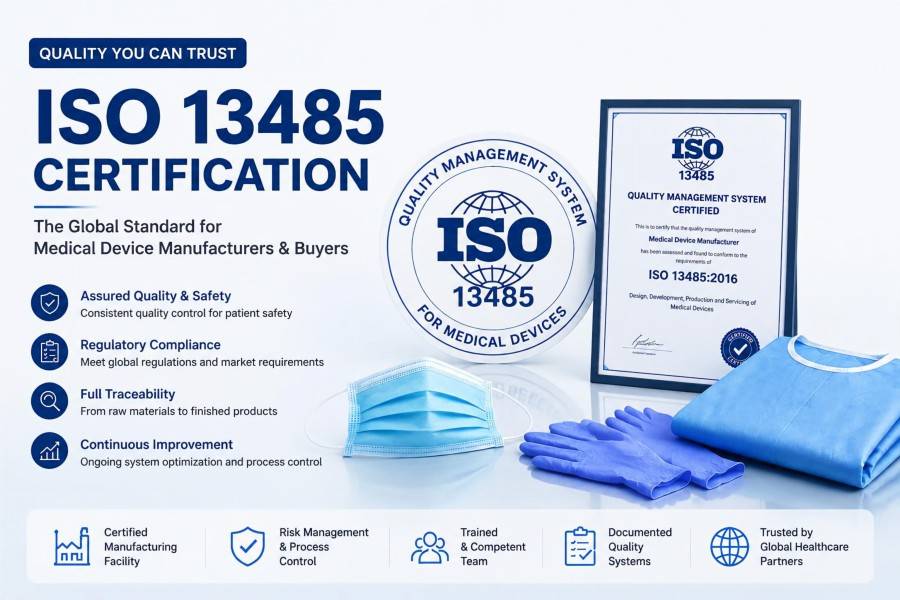
What Is ISO 13485 Certification?
ISO 13485 is an internationally recognized quality management system standard developed
specifically for companies involved in medical devices.
Unlike general quality standards, ISO 13485 focuses on the unique requirements of the
medical device industry, including product safety, documentation control, and regulatory
compliance.
The standard covers important areas such as:
Quality management systems: Establishing controlled processes for
consistent production.
Product traceability: Maintaining records from raw materials to finished
products.
Risk management: Identifying and controlling potential product risks.
Documentation control: Ensuring production and quality records are properly managed.
Corrective and preventive actions (CAPA): Improving processes when issues are identified.
For medical manufacturers, ISO 13485 provides a structured framework to consistently
produce safe and reliable products.
Is ISO 13485 a Product Certification?
This is one of the most important points that medical buyers should understand.
ISO 13485 ≠ Product Certification
ISO 13485 certifies the manufacturer's quality management system, not an individual
medical product.
For example, a manufacturer may hold ISO 13485 certification, but buyers still need to
verify:
A reliable sourcing decision should consider both:
Manufacturer Quality System
ISO 13485 certification
Product Compliance
Testing reports & market requirements
Why ISO 13485 Matters for Medical Device Buyers
1. Better Production Control
Medical products require consistent quality during every production batch.
ISO 13485 requires manufacturers to establish controlled procedures for:
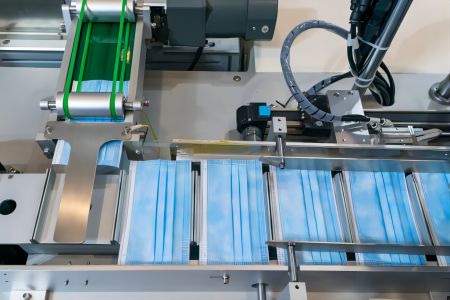
For disposable medical products such as masks, gowns, and other healthcare supplies,
production consistency directly affects product reliability.
2. Improved Product Traceability
Medical supply chains require clear and complete documentation.
A professional ISO 13485 manufacturer should maintain records related to:
Raw material batches
Production records
Inspection results
Shipment information
This traceability helps buyers identify and manage potential quality issues more efficiently.
3. Stronger Risk Management
Medical products directly affect healthcare workers and patients. Therefore, manufacturers
must have processes to identify and control possible risks.
ISO 13485 encourages manufacturers to manage risks throughout the product lifecycle,
from material selection to production and quality monitoring.
What Should Buyers Check Besides ISO 13485?
ISO 13485 certification is an important factor when evaluating medical suppliers, but it
should not be the only consideration.
Professional buyers should also evaluate the following areas before selecting a long-term
manufacturing partner:
1. Product Certifications and Regulatory Compliance
Different markets have different requirements for medical products. Buyers should confirm
that suppliers can provide the necessary documentation for their target market.
Depending on the product category and destination country, common requirements may include:
CE marking for European markets
FDA-related requirements for the United States market
EN standards for European medical products
ASTM standards for specific medical products
A qualified supplier should understand both manufacturing requirements and international
market compliance.
2. Product Testing Reports
Certificates alone do not always demonstrate actual product performance.
Before placing bulk orders, buyers should request relevant testing documents, including:
Third-party laboratory reports
Material testing results
Product performance verification
Batch quality inspection records
Reliable manufacturers should be transparent about their quality verification process.
3. Manufacturing Capability and Export Experience
A certification shows that a manufacturer follows a quality system, but production
capability determines whether the supplier can support long-term cooperation.
Medical buyers should evaluate:
Production capacity and equipment capability
Quality inspection procedures
OEM and customization experience
International shipping experience
After-sales support capability
How to Verify an ISO 13485 Supplier?
Before starting cooperation, medical buyers should carefully review the supplier's
certification information.
1. Check the Certification Scope
An ISO 13485 certificate should clearly identify:
The scope should match the products you plan to purchase.
2. Review the Certification Organization
Buyers should confirm that the certification body is recognized and that the certificate
information can be verified.
A professional supplier should be willing to provide supporting documents and answer
questions regarding certification details.
3. Confirm Certificate Validity
Always check:
Common Mistakes When Selecting Medical Suppliers
Mistake 1: Choosing Suppliers Only Based on Price
Medical products require consistent quality and reliable documentation. The lowest price
does not always represent the lowest overall sourcing cost.
Poor quality control may lead to:
Product rejection
Delivery delays
Compliance problems
Mistake 2: Assuming ISO 13485 Means Every Product Is Certified
ISO 13485 demonstrates the manufacturer's quality management capability, but buyers
still need to confirm product-specific requirements.
Mistake 3: Ignoring Supplier Experience
A reliable medical supplier should provide not only certified processes but also practical
experience in manufacturing and international cooperation.
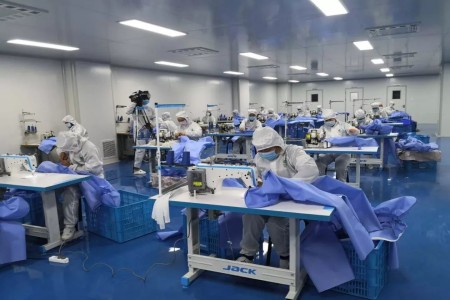
How Honway Med Maintains Quality Management
Honway Med operates with a focus on controlled manufacturing processes and quality
management for global medical disposable product markets.
Our quality approach includes:
Quality-controlled production procedures
Raw material inspection
Product quality verification
Documentation management
Support for international compliance requirements
For medical distributors and importers, choosing a qualified manufacturing partner helps
build a more stable and reliable supply chain.
Frequently Asked Questions
Is ISO 13485 mandatory for medical device manufacturers?
Requirements vary depending on the product category and target market. However, ISO 13485
is widely recognized as an important quality management standard for medical device
manufacturers.
Does ISO 13485 certify medical products?
No. ISO 13485 certifies the manufacturer's quality management system, not individual
products. Product compliance must be evaluated separately.
Why should medical buyers choose ISO 13485 suppliers?
ISO 13485 suppliers generally have structured processes for quality control, documentation,
risk management, and production consistency.
How can I verify an ISO 13485 certificate?
Buyers should check the certificate scope, certification body, validity period, and confirm
that the certification matches the supplier's actual products and activities.
Looking for an ISO 13485 Medical Supplier?
Honway Med provides disposable medical product manufacturing solutions for global
distributors, importers, and healthcare organizations.
Contact Honway Med


 WhatsApp
Send us your message
You can send an email asking for the price and detailed information of this product. We will reply you as soon as we receive your email