2023/6/16
Share to:
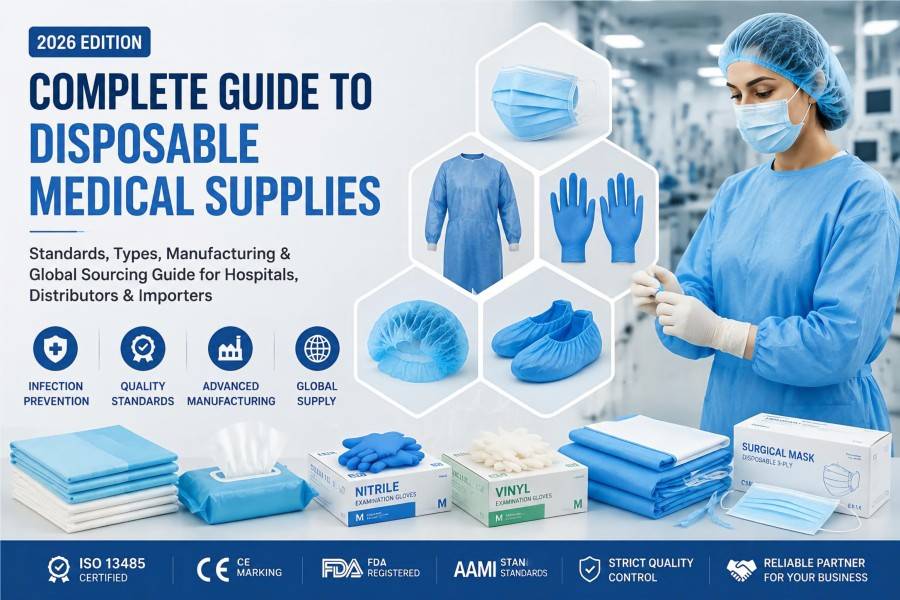
Complete Guide to Disposable Medical Supplies
Standards, Types, Manufacturing & Global Sourcing Guide for Hospitals, Distributors & Importers
1. Introduction
Disposable medical supplies have become an essential part of modern healthcare systems worldwide. From hospitals and clinics to laboratories and emergency care environments, single-use medical products play a critical role in infection prevention, patient safety, and operational efficiency.
In recent years, global demand for disposable medical consumables has increased significantly due to stricter hygiene standards, rising awareness of cross-contamination risks, and continuous growth in healthcare infrastructure across emerging markets.
This guide provides a complete overview of disposable medical supplies, including product categories, materials, manufacturing processes, certifications, and sourcing strategies for global buyers.
2. What Are Disposable Medical Supplies?
Disposable medical supplies refer to single-use products designed for hygiene protection, infection control, and patient care. These products are typically discarded after one use to eliminate the risk of cross-contamination.
Common disposable medical products include:
Face masks (surgical masks, N95 masks)
Isolation gowns & surgical gowns
Medical gloves (nitrile, vinyl, latex)
Bouffant caps & surgical caps
Shoe covers & sleeve covers
Underpads & patient care products
Surgical drapes and consumables
These products are widely used in hospitals, clinics, dental centers, laboratories, and emergency medical services.
3. Types of Disposable Medical Products
🩺 3.1 Protective Apparel
Isolation gowns
Surgical gowns
Coveralls (microporous / SMS material)
😷 3.2 Face Protection
3-ply surgical masks
N95 / FFP2 respirators
Medical-grade protective masks
🧤 3.3 Hand Protection
Nitrile gloves
Vinyl gloves
Latex gloves
🧢 3.4 Head & Foot Protection
Bouffant caps
Surgeon caps
Shoe covers
🛏️ 3.5 Patient Care Products
Disposable underpads
Patient gowns
Bed protection sheets
Each category is designed for specific medical environments and protection levels depending on contamination risk.
4. Materials Used in Medical Disposable Products
The performance of disposable medical supplies depends heavily on raw materials.
🧵 4.1 Non-Woven Fabric (PP Spunbond)
Lightweight, breathable, widely used in masks, caps, and gowns.
🧵 4.2 SMS Fabric (Spunbond-Meltblown-Spunbond)
Multi-layer structure offering high filtration efficiency and fluid resistance.
🧵 4.3 Meltblown Fabric
Core filtration layer used in surgical masks and respirators.
🧵 4.4 PE & PP Coated Materials
Used in waterproof gowns and protective coveralls.
Material selection directly affects comfort, protection level, and compliance with medical standards.
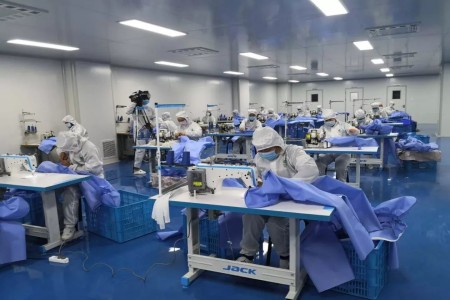
5. Manufacturing Process Overview
Disposable medical products are manufactured under strict quality control systems to ensure safety and consistency.
Typical production steps include:
Raw material selection and inspection
Fabric production (non-woven / meltblown)
Cutting and shaping
Ultrasonic welding or stitching
Assembly and sealing
Sterilization (if required)
Quality inspection
Packaging and labeling
Modern factories often operate in cleanroom environments to minimize contamination risks and ensure compliance with international standards.
6. Quality Standards & Certifications
To enter global markets, disposable medical products must meet strict regulatory requirements.
📜 Key Certifications:
ISO 13485 (Medical device quality management system)
ISO 9001 (General quality management)
CE Certification (EU market compliance)
FDA Registration (US market compliance)
🧪 Key Performance Standards:
AAMI Levels (for surgical gowns)
EN 14683 (surgical masks)
EN 149 (respirators)
These certifications ensure product safety, performance reliability, and regulatory approval across different countries.
7. Applications in Healthcare
Disposable medical supplies are used across multiple healthcare environments:
🏥 Hospitals & surgical rooms
🏥 Outpatient clinics
🧪 Laboratories & testing centers
🚑 Emergency medical services
🦷 Dental clinics
🧬 Pharmaceutical production facilities
Their primary role is to reduce infection risks and maintain sterile environments.
8. Global Medical Supply Chain Trends (2026 Outlook)
The global medical consumables industry is undergoing significant transformation:
Increasing demand for infection prevention products
Expansion of healthcare infrastructure in developing countries
Rising adoption of OEM/private label manufacturing
Strong focus on supply chain resilience
Shift toward cost-efficient disposable solutions
China remains one of the largest manufacturing hubs for disposable medical supplies, offering integrated production capabilities and competitive pricing for global buyers.
9. Buying Guide for Importers & Distributors
When sourcing disposable medical products, buyers should consider the following factors:
✔ Supplier Evaluation
Manufacturing capability
Cleanroom standards
Production capacity
✔ Certifications
ISO 13485
CE / FDA compliance
✔ Product Quality
Material consistency
Barrier protection performance
Comfort and breathability
✔ Commercial Factors
MOQ (Minimum Order Quantity)
Lead time
OEM/ODM customization options
Packaging & branding support
Choosing the right supplier directly impacts product quality, cost efficiency, and long-term business stability.
10. Why Work With a Professional Manufacturer
Working with an experienced manufacturer ensures:
Stable product quality
Regulatory compliance
Scalable production capacity
Custom branding (OEM/ODM)
Competitive pricing for bulk orders
Reliable manufacturers play a critical role in supporting global healthcare systems with consistent and safe medical consumables.
11. Conclusion
Disposable medical supplies are a cornerstone of modern healthcare infrastructure. As global demand continues to grow, hospitals, distributors, and importers must prioritize quality, compliance, and reliable sourcing partners.
Understanding product types, materials, standards, and manufacturing processes is essential for making informed purchasing decisions in the medical supply industry.
News Center
Industry News



 WhatsApp
Send us your message
You can send an email asking for the price and detailed information of this product. We will reply you as soon as we receive your email